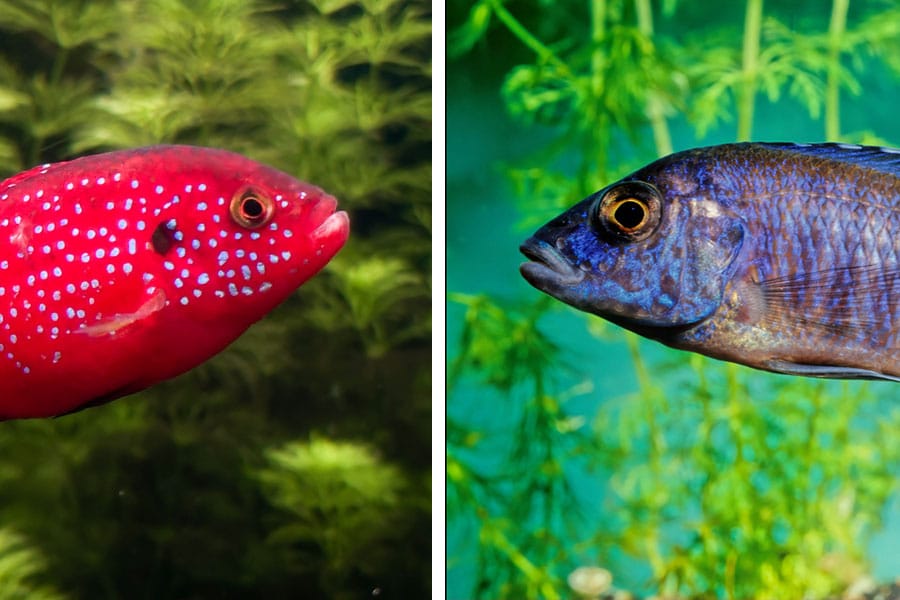
Cichlids (pronounced SICK-lids) are one of the most colorful, intelligent, and fascinating groups of freshwater fish available to aquarium hobbyists. With hundreds of species found around the world, cichlids vary greatly in size, temperament, diet, and care requirements.
Most aquarium cichlids fall into two main groups: Central and South American cichlids and African cichlids. While both are known for their striking colors and unique personalities, they have key differences when it comes to water parameters, compatibility, habitat, and behavior.
Check out these FAQs from Dan (our resident freshwater fish expert) about both types of cichlids so you can make the most informed decision possible. And remember: here at Moby Dick Pet Store, we carry all kinds!
Central/South American Cichlids
How big do cichlids get?
Cichlids can range from a couple inches to more than three feet long.
Are cichlids aggressive?
Cichlids have a reputation for being aggressive, but some can be peaceful additions to a community aquarium.
Can different types of cichlids live together?
Some larger cichlids are too territorial to share a tank; others can be kept together as long as they have enough space.
What size tank do cichlids need?
Larger cichlids like Oscars require 75-100 gallons to live comfortably. Dwarf species can be kept in tanks as small as 10 gallons.
What water temperature and pH do cichlids prefer?
An average temperature of 72-78 degrees and a pH close to neutral or slightly acidic is suitable for many, though some species, like rams, angelfish and discus prefer temps over 80.
What do cichlids eat?
Most Central/South American cichlids prefer foods high in protein. Blood worms, black worms and brine shrimp are a favorite treat.
How often should I feed my cichlids?
One feeding per day is suitable for most cichlids. Larger cichlids can be fed every couple of days.
What fish can live with cichlids?
Fish that are large enough to hold their own can live with more peaceful cichlids. Avoid anything that could fit in the cichlid’s mouth.
Do cichlids need rocks, caves, or hiding places?
Most cichlids will feel more secure with structures in the tank that they can hide in.
Can cichlids live with live plants?
Many cichlids can live with plants, though some species will eat them, or uproot the plants when digging in the substrate.
How often should I change the water in a cichlid tank?
As with any fish, regular water changes are important. Larger cichlids can be messy fish, and may require weekly water changes.
How long do cichlids live?
Many cichlids will live up to 10 years with good care, while some can live up to 20!
How can I tell if my cichlid is healthy?
A healthy cichlid should be active with a good appetite. Poor coloration, lethargy or clamped fins can be an indicator of disease or poor water quality.
Why is my cichlid hiding or refusing to eat?
There are many reasons a cichlid might hide or refuse food. Disease or poor water quality may be an issue, or too much aggression in the tank. Newly added fish may also hide or refuse food for the first few days.
Why are my cichlids chasing or fighting each other?
Cichlids can be territorial or defensive. A bit of chasing here and there is normal and usually not harmful, but keep an eye out for injuries or torn fins. Excessive fighting may be caused by a tank that is not large enough, mixing more aggressive species, or breeding.
How can I tell if my cichlid is male or female?
Typically brighter colored fish tend to be male, but this is not always the case with cichlids. Male Central/South American cichlids also tend to have longer/more pointed fins.
Do cichlids breed easily in home aquariums?
Some cichlids will readily breed in your aquarium. They may require structures like a cave or a flat rock on which to lay their eggs. Many cichlids will guard their eggs and newly hatched fry.
How do I choose the right cichlid for my aquarium?
When looking at cichlids, research size and level of aggression to be sure your aquarium and tank mates are compatible.
African Cichlids
What types of African cichlids are there?
African cichlids are typically separated based on habitat. There are three main groups: Malawi, Tanganyika, and Victorian, named for the lakes they come from in Africa.
How big do cichlids get?
While size varies in each group, Malawi cichlids are commonly larger, with most Tanganyikans typically being smaller.
Are cichlids aggressive?
On average, Malawi cichlids tend to be more aggressive, while some Tanganyikans can be kept with more peaceful species.
Can different types of cichlids live together?
It is usually best to keep cichlids from the same lakes together. Not only because their temperaments tend to be similar, but because each lake has different water parameters. Mixing African and South American cichlids is usually not recommended.
What size tank do cichlids need?
Smaller Tanganyikan cichlids, like shelldwellers and smaller julidichromis species, can live comfortably in tanks as small as 20 gallons. Larger Malawis like mbunas typically require tanks of 50 gallons or more, while groups of peacocks/haps do best in large tanks around 100 gallons.
What water temperature and pH do cichlids prefer?
75-82 works for most African cichlids. Keeping your temperature on the lower end of this range may help to reduce aggression. pH for African cichlids varies, even in the wild. In lake Malawi for example, the pH ranges from 7.6 to 8.2, while in lake Tanganyika it can vary from 8.5 to 9.5. On average, most African cichlids will do best with a higher pH. More important than chasing a specific number however, is to keep the pH stable.
What do cichlids eat?
The diet of African cichlids varies, so it is important to research individual species. Some, like mbunas from Malawi and tropheus from Tanganyika are mostly vegetarian, and can actually get sick if they are fed too much protein.
How often should I feed my cichlids?
Typically one feeding every day or two is suitable for most, although more active smaller cichlids often graze constantly in the wild, and so can benefit from more frequent feedings (in smaller amounts).
What fish can live with cichlids?
Despite being more aggressive, there are other fish that can coexist with many African cichlids. For example, species of Synodontis catfish are native to Africa and live alongside cichlids in the wild. They spend most of their time scavenging for food on the bottom, and can make good tankmates for cichlids.
Do cichlids need rocks, caves, or hiding places?
Having lots of rocks and driftwood structure helps mimic a natural habitat for African cichlids, and can reduce stress and promote more natural behavior.
Can cichlids live with live plants?
Only the toughest plants will typically survive with African cichlids. Many cichlids will eat plants, while others will uproot them when they dig in the substrate.
How often should I change the water in a cichlid tank?
Because African cichlids are often overstocked to reduce aggression, they may require more frequent water changes than the average tank.
Why are my cichlids chasing or fighting each other?
Chasing is common, even with less aggressive cichlid species, but shouldn’t result in injuries. If your cichlids are injuring each other, they may not be compatible, or they may require a larger tank.
How can I tell if my cichlid is male or female?
In some species, like peacocks, the males will be much more colorful than females as they mature. In some species, the presence of spots on the anal fin, called egg spots, usually indicates a male.
Do cichlids breed easily in home aquariums?
Many African cichlids will breed in home aquariums, though the fry will often be eaten if they are not separated from the adults.
What are the most common mistakes new cichlid owners make?
Overfeeding and mixing incompatible species are easy mistakes to make. If you are interested in cichlids, be sure to do some research on the species and the care required for them.
Drop in to Moby Dick Pet Store Today
We would be happy to discuss the many different types of cichlids we have in stock and help you understand their unique temperaments and needs. To learn more, call us today at (248) 673-2520.