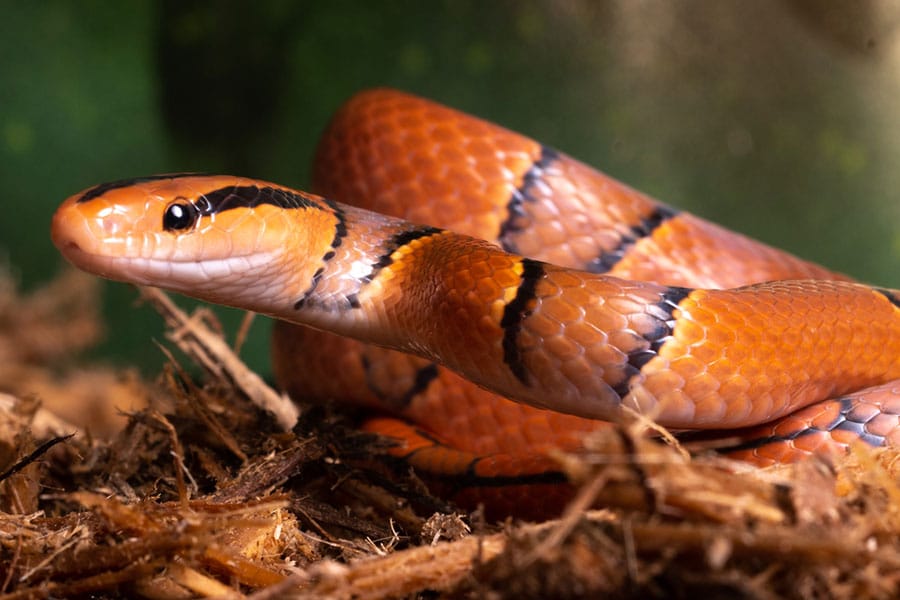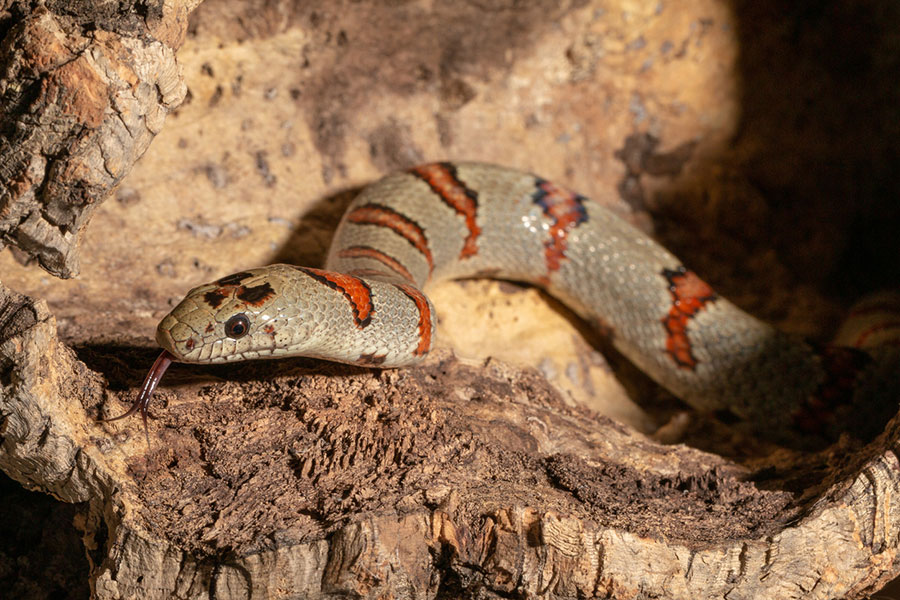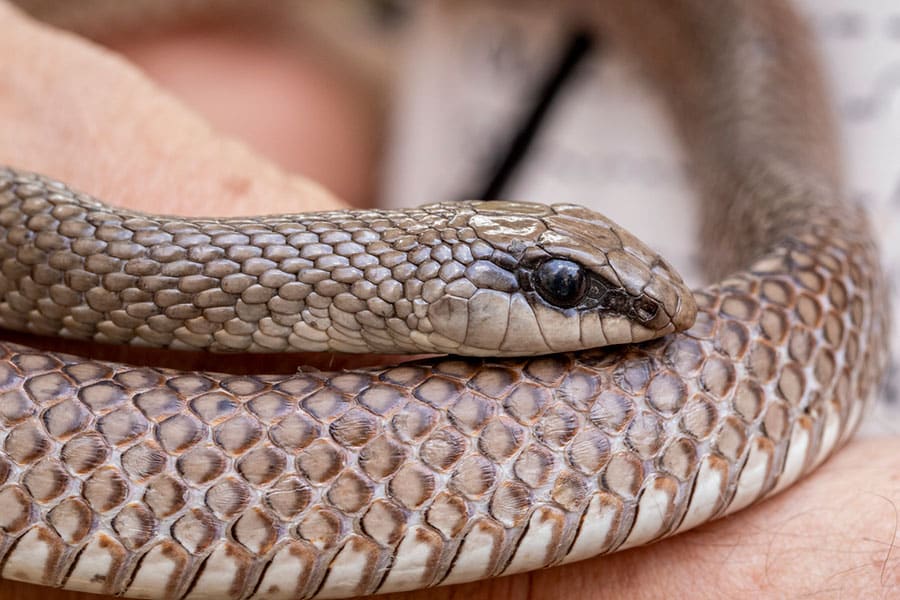
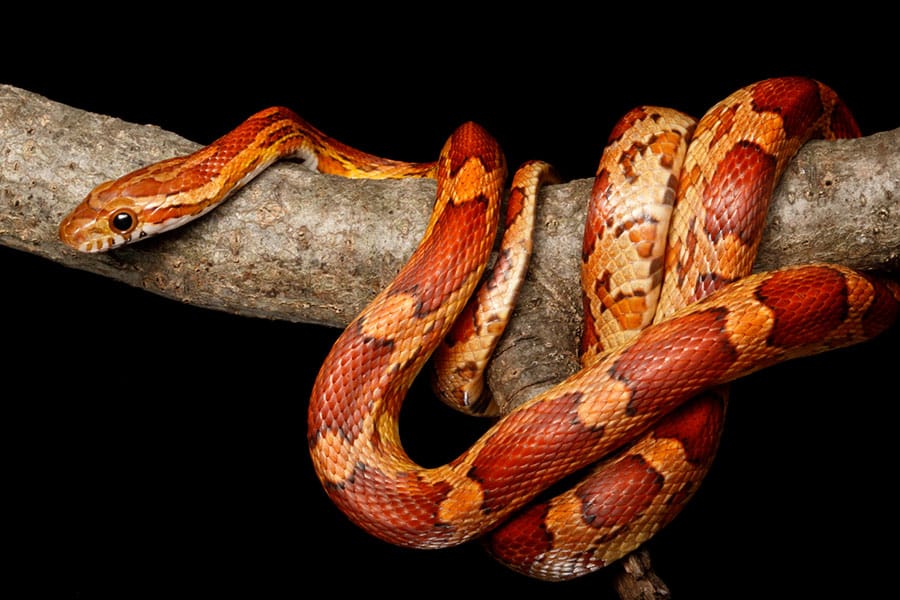
Corn snakes are a nonvenomous species of North American ratsnake, which have become very popular pets for beginner reptile keepers, as they are very sociable and docile.
They have an average lifespan of 10-20 years, and can grow to about 3 feet if it’s a male, or 5 feet if it’s a female.
Lighting: Corn snakes need a daytime temperature of 80-85 degrees, with a basking spot that’s kept around 90 degrees. The cool side of the tank should remain around 75, and night temperatures shouldn’t fall below 60. You can create a warm and cool side in the tank by placing the heat lamp on one far end of the tank, creating a heat gradient.
They can also have a UVB light, which is a type of light that gives off vitamins that are produced from the sun. Having this light can improve bone structure, help process calcium, and improve overall health of reptiles. While corn snakes don’t need this type of light to survive, it is highly beneficial and always recommended.
Tank: All enclosures should be well ventilated, and have a secure lid to prevent the snake from escaping. When choosing a tank for your snake, you want it to ideally be the length of your snake, and half of the width, although many people choose a 40 gallon breeder tank, which is commonly considered the minimum tank size for a corn snake.
The substrate you use can vary depending on what you prefer. Aspen bedding is often the easiest to clean, although not the prettiest. One of the best substrate options is a mix of any reptile safe dirt, and coconut fibers. This combination can help keep the humidity up, you want it ideally around 40-60%.
Feeding and Watering: Corn snakes are carnivores, with a diet that mainly consists of rodents like mice and rats. The size of the rodent you need will depend on the size of your snake. The best way to tell what size you need is to look at the widest part of the snake and then choose a rodent that is about 1 to 1.5 times the width.
When feeding snakes frozen food, you’ll need to thaw out the rodent first. The best way to do this is to put the rodent in a cup of warm water for about 10-15 minutes. You want to make sure the rodent is warm before feeding, otherwise they may spit it out.
Typically, it is best to remove the snake from the tank and put it elsewhere, like a cardboard box or old tupperware. (something you can throw out in case it gets gross) This will help associate hands reaching into the tank with food, and this can allow for a calmer more docile snake.
Corn Snake Supplies Checklist
- Tank
- Screen lid
- Lid clamps
- Foliage
- Water bowl
- Thermometer
- Hydrometer
- Light fixture
- Heat bulb
- UVB
- Mister
- Substrate
- Moss
Have More Questions? Call the Experts at Moby Dick Pet Store at (248) 673-2520