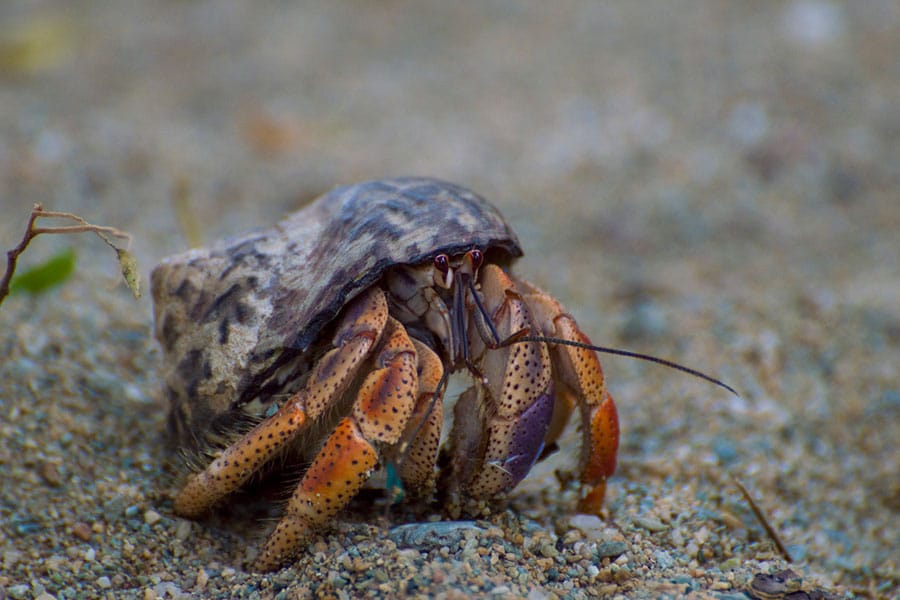
Hermit crabs are a type of crustacean, native to coastal regions around the world. Many of the common types of hermit crabs grow to around two to five inches, and tend to have a life span anywhere from 10-20 years with proper care. Hermit crabs have very soft abdomens, so they find empty shells to use as protection from predators. As hermit crabs grow, they’ll need to find bigger shells to live in, so it’s important to have multiple shell sizes for them to move to as they need. Hermit crabs are very social, and can make a great beginner pet!
Lighting: A UVB light is a type of bulb that produces the vitamins that the sun produces. While hermits don’t necessarily require UVB, it is still highly beneficial, and always recommended.
For heating, a small heat mat, or light will be required. Hermit crabs need a temperature between 72–80°F. You can place a small heat lamp on top of the tank, or a heat mat on two sides of the tank. Make sure the heat lamp is not placed on the bottom of the tank, as they can get burned.
Tank: The minimum tank size for one hermit crab is a 10 gallon tank. However, because hermit crabs are social it’s better to have a 20 gallon tank to keep 3-4 hermits together.
Hermit crabs require a humidity of 70-90%, anything lower can cause extreme health issues, and may risk death. The best substrate option for hermits is a mix of sand, coconut fiber, and soil. Having moss in the tank can also be beneficial, to help hold in humidity and add a layer of hiding.
Hermit crabs love climbing! It’s a good idea to have plenty of sticks to climb on, as well as having the substrate deep enough for them to dig in.
Feeding and Watering: Hermit crabs need salt and freshwater bowls. They will need a bowl of saltwater to help them regulate their bodily fluids, obtain essential minerals, and help them molt.
Hermit crabs are omnivores, so they should have a mixed variety diet. They can eat veggies like spinach, lettuce, and zucchini. Protein can include any calcium dusted insect, like mealworms, crickets or roaches. Just make sure they will be able to catch the insect you choose to feed. There are also dried insects, which you can just place in the food bowl to make feeding easier.
Hermit Crab Supplies Checklist
- Tank
- Screen lid
- Lid clamps
- Foliage and sticks
- Three bowls (food, saltwater and freshwater)
- Thermometer
- Hydrometer
- Saltwater
- Extra shells
- Light fixture
- Heat bulb or mat
- UVB
- Mister
- Substrate
- Moss
- Calcium
Have More Questions? Call the Experts at Moby Dick Pet Store at (248) 673-2520