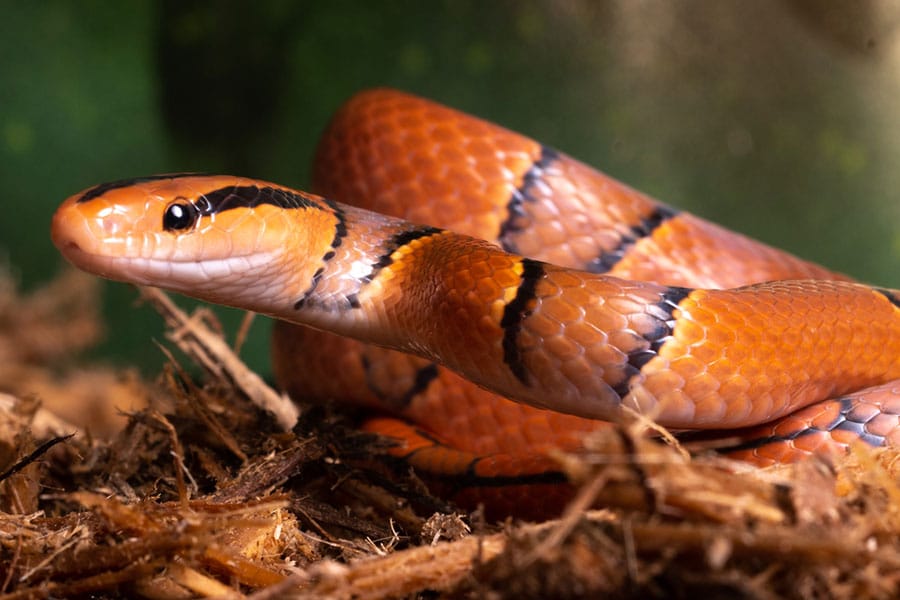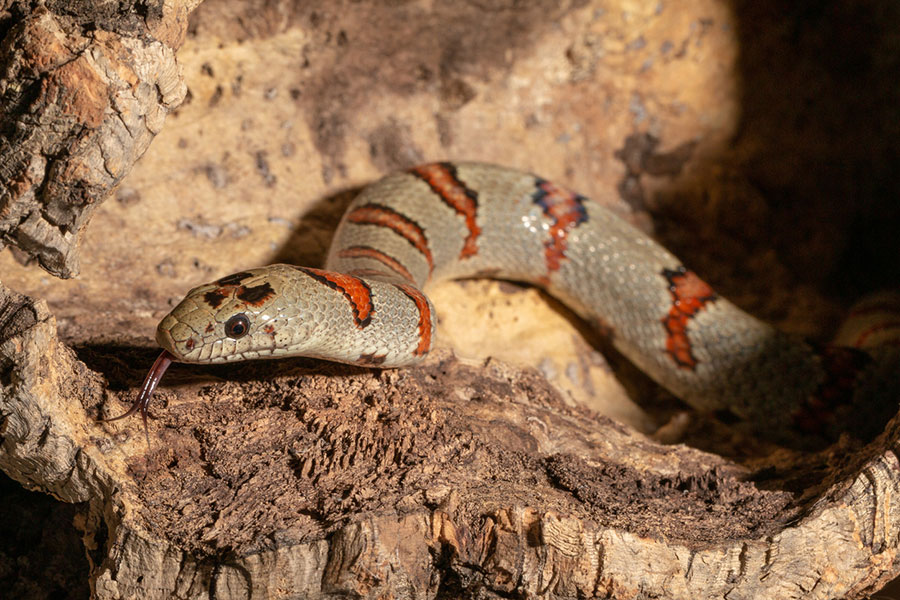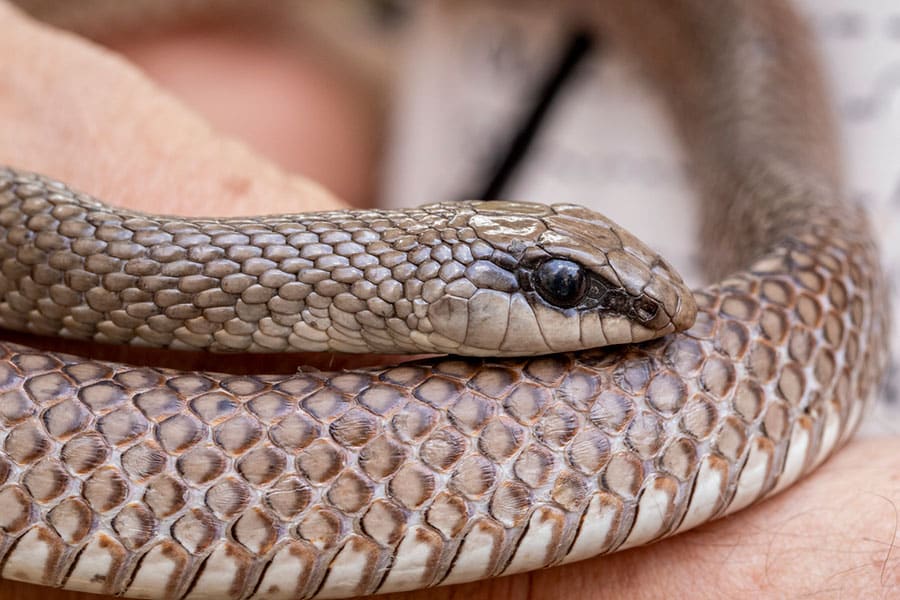
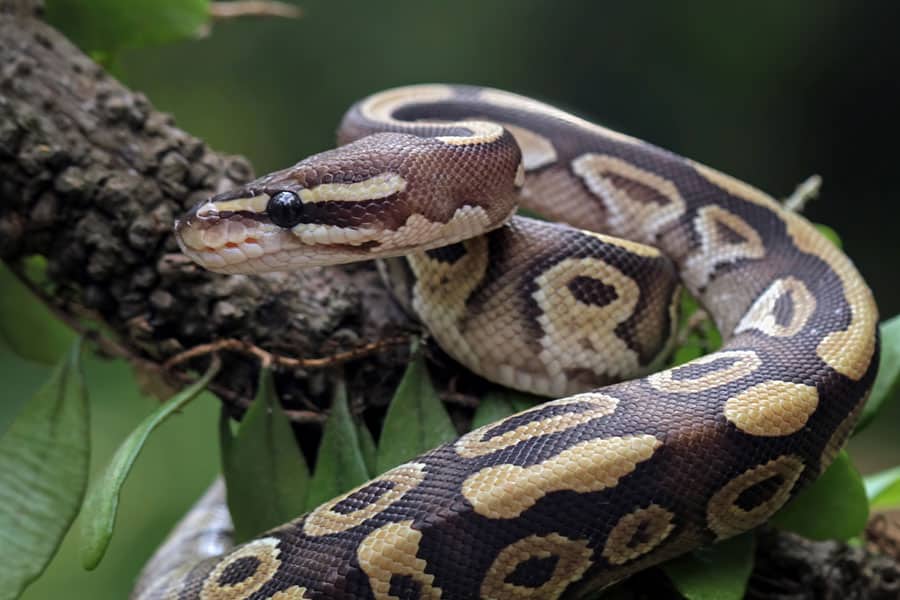
About: Ball pythons are a terrestrial species of constricting snake native to western and central Africa. They are crepuscular, which means they are mostly active during dusk and dawn. Ball pythons tend to live between 20 and 30 years in captivity, and can grow to around three feet if male, and five feet if female. These snakes are super docile and low maintenance, making them a great beginner snake.
Lighting: Ball pythons need a daytime temperature of 80-85° F, and should have a basking spot of around 90° F. The light should be placed on one side of the tank to create a heat gradient, so one side of the tank can be warm, and the other side can be cool. This allows the snake to regulate its temperature.
A UVB light is a type of light that gives vitamins that are produced by the sun. This helps process calcium and improves overall health. Ball pythons don’t require UVB to survive, but it is highly recommended and can help improve bone health.
Tank: A 40 gallon breeder is the minimum size for an adult ball python, but anything bigger will allow more room to explore and stretch. Typically, when getting a tank for a snake you want it to be the length of the snake, and the width of half of the snake’s length. A ball python will reach its adult size within three years, so while having a smaller tank for a baby is ok, it’ll have to be moved to a big tank shortly after.
The best soil for ball pythons is often just a mix of any reptile-safe soil and coconut coir. The humidity should be between 40-60%, and adding moss can help keep the humidity up.
Feeding and Watering: Ball pythons are carnivores that mainly eat rodents like rats and mice. The size of the rodent you need will depend on the size of your snake. The best way to tell what size you need is to look at the widest part of the snake and then choose a rodent that is about 1 to 1.5 times the width.
When feeding snakes frozen food, you’ll need to thaw out the rodent first. The best way to do this is to put the rodent in a cup of warm water for about 10-15 minutes. You want to make sure the rodent is warm before feeding; otherwise, they may spit it out.
It is best to remove the snake from the tank and put it elsewhere, like a cardboard box or old Tupperware (something you can throw out in case it gets gross). This will help associate hands reaching into the tank with food, and this can allow for a calmer, more docile snake.
Ball Python Supplies Checklist
- Tank
- Screen lid
- Lid clamps
- Foliage
- Water bowl
- Thermometer
- Hydrometer
- Light fixture
- Heat bulb
- UVB
- Mister
- Substrate
- Moss
Have More Questions? Call the Experts at Moby Dick Pet Store at (248) 673-2520