Multiplying Shrimp
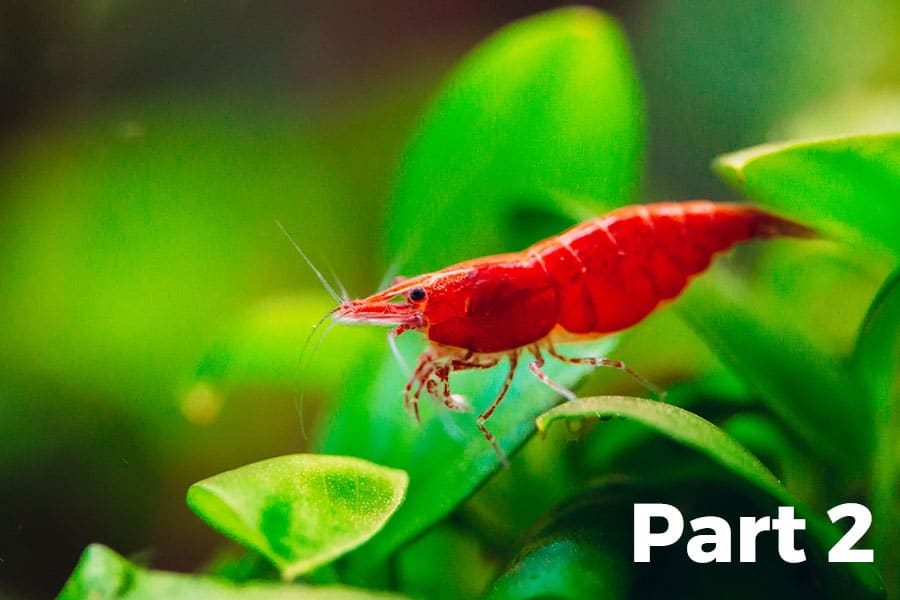
Cherry shrimp are some of the easiest freshwater pets to breed. Most of the time, just having a mix of females and males will guarantee you’ll soon see some shrimplets in your aquarium, but there are a few things you can do to encourage your shrimp to multiply.
- Have a mix of males and females. Sexing shrimp is easier when they are fully grown. Females may be seen carrying eggs under their abdomen, while undeveloped eggs are visible as a light-colored patch on the female’s back, called a saddle. Females also have more rounded abdomens/tails, as the plates of their shells extend further to cover the eggs. Males also tend to be smaller than females, and often are not as brightly colored, though this is not always the case.
- Keep water parameters stable, providing enough minerals, food, and some hiding places for egg bearing females to increase your chances of having baby shrimp. Shrimp will also be more likely to breed if the water temperature is above 70.
- Baby shrimp hatch from eggs as fully formed juvenile shrimp, and do not require any special care or different food. Keep in mind that while baby shrimp are safe with adults, they can be a bite sized snack for other tank mates, even fish that are too small to bother adult shrimp may be tempted to eat babies.
- One last thing to consider is color. All colorful varieties of cherry shrimp are selectively bred from the same species, and thus can interbreed. Shrimp breeders keep their stock separated into breeding lines to maintain colors and higher grades, removing shrimp with poor color, and occasionally adding other higher grade shrimp to keep the gene pool healthy.
- Nothing prevents you from mixing different color shrimp in your home aquarium, and you may wish to do so in a display tank. Just keep in mind that for breeding purposes, mixed shrimp may produce poor color or throwbacks, translucent or brown shrimp that resemble wild cherry shrimp. If you wish to maintain bright colors, its best to keep shrimp from only one line per tank.
Tank Mates
When setting up a shrimp tank, you may wish to add other livestock for variety. Small nano fish will be your best bet. Ember tetras, reed tetras, chili or phoenix rasboras, and celestial pearl danios (galaxy rasboras) make good tankmates that are active swimmers, and are unlikely to bother even baby shrimp.
Pygmy cory cats, nerite snails, and mystery snails can also be kept with shrimp, and will help with cleaning up algae and leftover food. Just keep in mind that snails also feed on biofilm, so having a large number will compete with your shrimp for food.
One last note: remember that cherry shrimp are not native to the Americas. As with any pet, it is our duty as hobbyists and pet owners to care for these animals responsibly, and to never release them into the wild. If you end up with too many shrimp, you can always find other aquarists who might take them, you can also donate or trade them to your local fish stores, or even use them as a food source for larger fish, frogs or turtles.
Visit Moby Dick Pet Store
Need help getting started with your small freshwater aquarium? Have questions about cherry shrimp? Visit us here at Moby Dick Pet Store or call us at 248-673-2520. We’ll get you set up with exactly what you need.
By Dan Donaghue