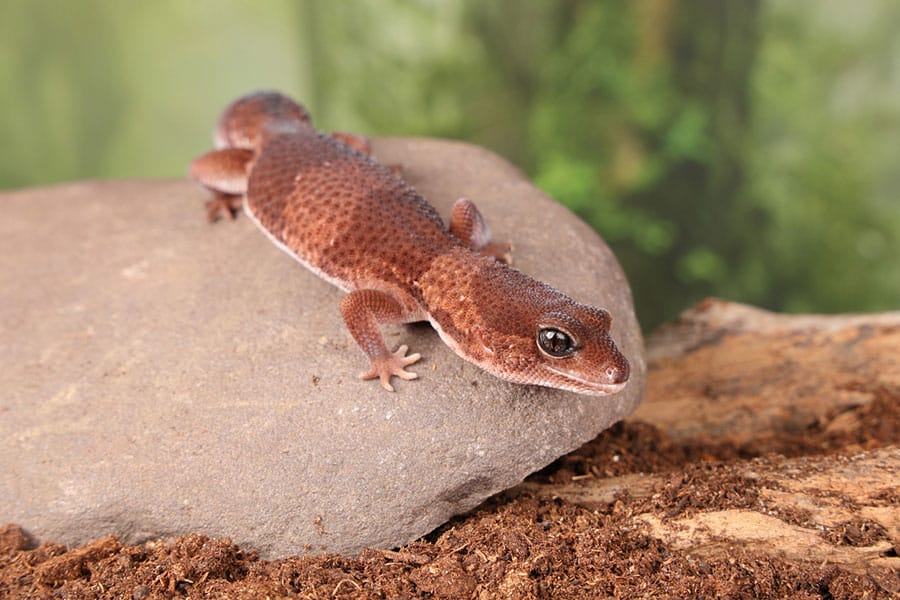
About: African fat tailed geckos are a ground-dwelling species found in West Africa and Cameroon. On average, fat tails grow about 8-10 inches in length, including the tail, making them a little smaller than leopard geckos. The name fat tailed gecko comes from the fact that they will store excess fat from food in their tail, making it a good emergency food stash. They tend to live 15-20 years in captivity, and in cases with ideal care, can sometimes live up to 25 years.
Fat tails are a very calm species of reptile and are often recommended for beginners due to their docile nature and low maintenance.
Lighting: African fat-tailed geckos require a temperature gradient to properly digest food and regulate their body temperature. You can create a temperature gradient by placing a heat lamp on one far side of the tank. The basking spot (hottest area of the tank) should be around 90-95°F and the cool side should stay around 70-75°F.
UVB is a type of light that is produced from the sun, and will help process calcium and give vitamins that the sun would normally give. Fat tailed geckos are nocturnal and strictly active during the night, so they don’t need the same UVB requirements other reptiles need. It is still highly recommended, and can greatly improve their health.
Tank: A minimum tank size for an adult fat tail is a 20 gallon long, but a 40 gallon breeder is highly recommended, as it can provide more room for exploring, hiding, and a happier, healthier gecko. The best substrate for a fat tail tends to be a mix of any reptile-safe dirt, and coconut fibers (sometimes called coir). Fat tails like it a bit more humid than leopard geckos, usually around 50-70%. You can achieve this by adding moss, and frequently misting the tank. Just be sure to not directly mist the gecko, as that can lead to scale rot.
Feeding and Watering: Fat tails can eat a variety of gut loaded (recently fed) insects, like crickets, dubia roaches, or meal worms. A good rule of thumb is whatever insect you feed should be about the width of their eyes.
Baby fat tails should eat daily, and adults should eat every 2-3 days.
Whatever type of insect you choose to feed, be sure to lightly dust it in calcium with d3, to help prevent metabolic bone disease, a common bone disease among reptiles.
Fat Tailed Gecko Checklist
- Tank (20 gallon minimum)
- Screen lid
- Lid clamps
- Foliage
- Hides
- Water bowl
- Thermometer
- Hydrometer
- Light fixture
- Heat bulb
- Substrate
- Mister
- Tongs
- Uvb
- Humidity hide
- Moss
- Calcium Powder
Have More Questions? Call the Experts at Moby Dick Pet Store at (248) 673-2520