A Beginner’s Guide
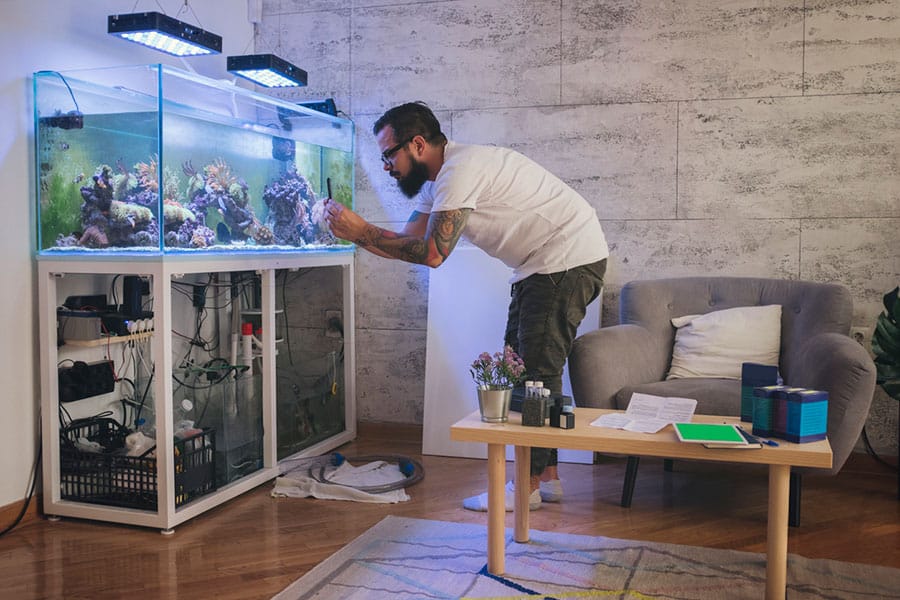
Aquarium keeping is a rewarding hobby that brings a piece of the underwater world into your home. But it’s not all about enjoying the colorful fish and plants. It takes a lot of hard work and patience to create and maintain a healthy ecosystem. Proper maintenance not only ensures good water quality, it supports fish health while keeping your tank looking its best.
If you’re a beginner, you may feel overwhelmed when it comes to learning about aquarium maintenance. But with a little diligence and dedication to a consistent routine, the process can be simple and stress free. It’s important to understand the basics of cleaning, testing water, and caring for your fish to create a stable environment where aquatic life can thrive.
The Importance of Aquarium Maintenance
Your aquarium is a living ecosystem. Fish produce waste, uneaten food breaks down, and natural processes change the water over time. If you neglect regular maintenance, harmful substances can build up and stress out or even kill your fish.
A consistent routine will:
- Keep water conditions stable
- Prevent harmful ammonia and nitrite buildup
- Reduce algae problems
- Support healthy fish behavior
- Maintain clear, clean water
- Preserve your aquarium equipment
A healthy aquarium is a balanced one!
The Basics of Aquarium Maintenance
From regular water testing to proper feeding routines, here are the basics you should know about aquarium maintenance:
Test Water Regularly
Water quality forms the foundation of a healthy aquarium. Regular testing will help you identify and catch potential issues before they affect your fish.
Tank water contains:
- Ammonia: Toxic to fish and should always remain at safe levels.
- Nitrite: Harmful to fish and indicates the aquarium cycle may be unstable.
- Nitrate: Less toxic than ammonia and nitrite but can become harmful at high levels.
- pH: Measures how acidic or alkaline the water is and should match the needs of your fish species.
- Phosphates: Not harmful to fish but harmful to coral at high levels and contributes to algae growth.
When you catch inconsistencies early, you can make necessary adjustments before fish become stressed.
Testing your water regularly will tell you when it is time for a water change.
Perform Regular Water Changes
Over time, waste products and dissolved substances accumulate in the water, and regular water changes are the best way to keep things fresh. Partial water changes help reduce nitrate and phosphate levels while preserving beneficial bacteria that support your aquarium’s biological filter.
On a regular basis, you should:
- Change a portion of the water
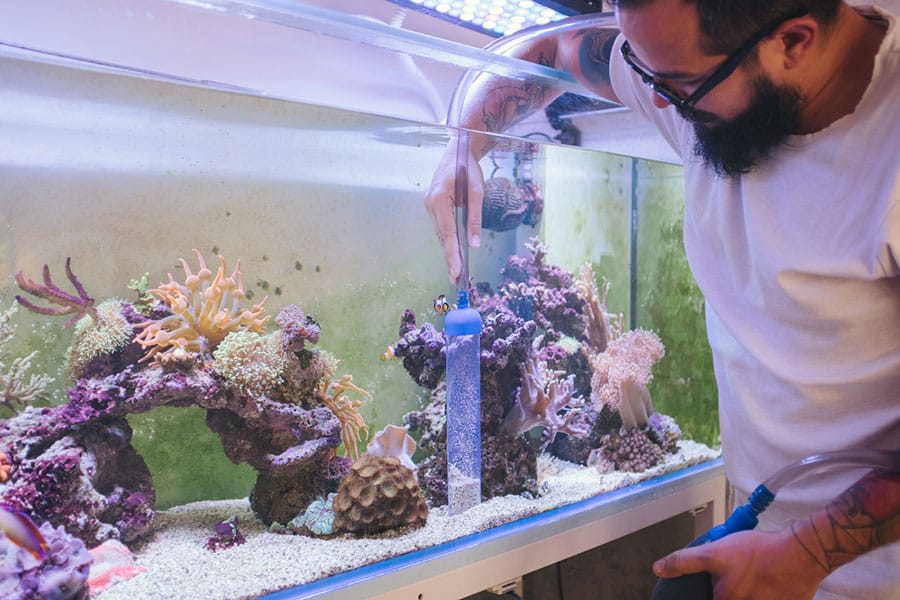
- Remove old water with an aquarium siphon
- Replace it with conditioned, temperature-matched water
- Avoid complete water changes unless necessary
On average, most aquariums will require a water change every 2-4 weeks. Aquariums that are over stocked, or containing sensitive livestock like corals, may need more frequent water changes.
Clean the Aquarium Properly
When cleaning your aquarium, you don’t have to take everything out and start over. In fact, it’s not a good idea to clean everything at once because this can remove helpful bacteria and disrupt the ecosystem.
When cleaning:
- Remove algae from the glass
- Gently clean decorations
- Vacuum debris from gravel or substrate
- Trim overgrown plants
- Check filters and equipment
A stable aquarium needs beneficial bacteria and natural balance to thrive.
Maintain Your Filter
Your filter not only removes visible debris, it encourages the presence of beneficial bacteria that process fish waste.
During maintenance:
- Check for proper flow of water
- Rinse filter media using removed aquarium water
- Replace filter parts only when needed
- Avoid replacing all filter media at once
Using old aquarium water for rinsing helps protect your biological filtration, as fresh tap water can contain chemicals that harm beneficial bacteria.
Feed Fish Properly
Overfeeding is one of the most common causes of aquarium problems. Excess food breaks down and increases waste. Most fish should not be fed more than once per day.
- Feed only what fish can eat in a few minutes
- Remove uneaten food when possible
- Choose food appropriate for your fish species
- Watch fish behavior during feeding
Observe Your Fish
Daily observation is an important part of aquarium care. In fact, fish behavior will often give you a clue about potential problems before they show up on a water test.
Watch for:
- Changes in swimming behavior
- Loss of appetite
- Hiding more than usual
- Unusual spots or markings
- Rapid breathing
Creating a Long-Term Aquarium Routine
Successful fishkeeping takes consistent effort and care. Not sure where to start? Here’s a general guideline:
Daily
- Check fish behavior
- Feed appropriately
- Make sure equipment is running properly
Weekly
- Test water
- Check temperature
- Remove algae if needed
- Perform a partial water change if needed
Monthly
- Inspect equipment
- Clean filter components when needed
- Review fish health and tank conditions
Remember: a well-maintained aquarium provides a safe, healthy environment for fish and creates a beautiful underwater display everyone can enjoy.
Visit Moby Dick Pet Store
We love to see beginners in our store! Let our staff walk you through the setup and maintenance process so you can take the next step with confidence. Visit us here at Moby Dick Pet Store or call us at 248-673-2520.