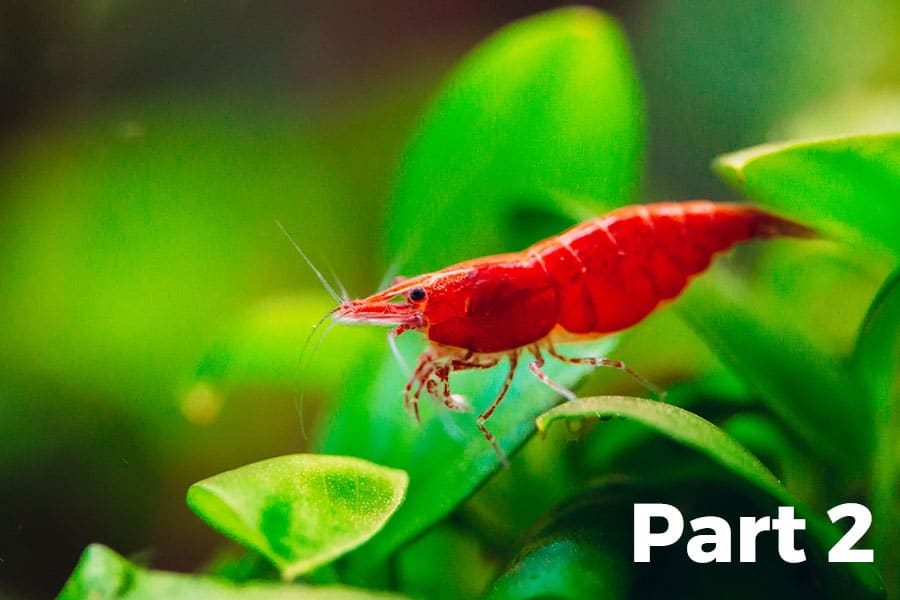
(Neocaridina davidi)
The Basics
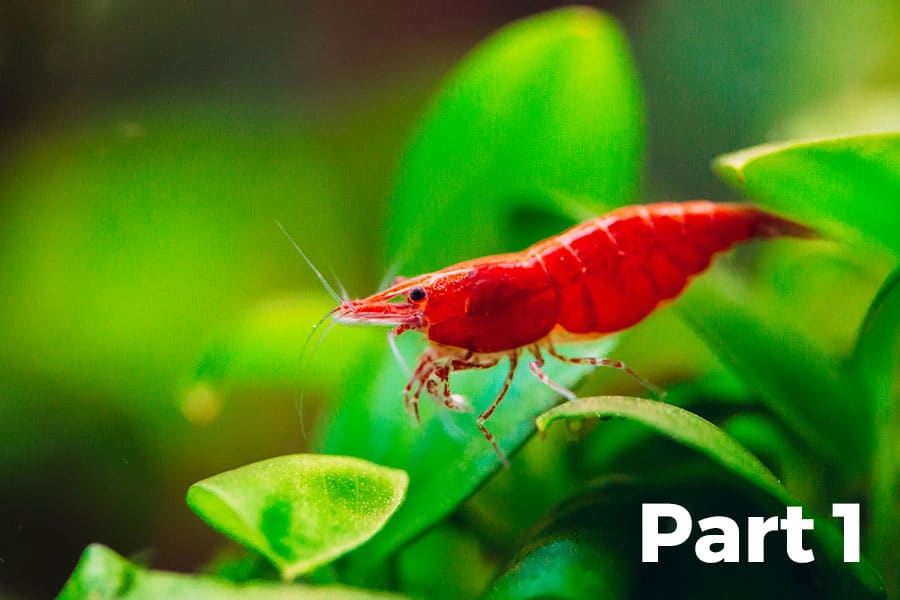
Nano tanks, aquariums that do not take up much space, yet can still be packed full of life, have become all the rage in the past few years. One of the most popular livestock choices for these smaller freshwater aquariums are cherry shrimp. Despite their name, cherry shrimp (Neocaridina davidi) come in a variety of colors, hues, and patterns. With varying shades of reds, blues, greens, yellows, oranges, whites, and blacks, you can find just about every color of the rainbow when it comes to cherry shrimp. There are many species of shrimp, but if you’re looking for something easy to care for, look no further than the cherry shrimp.
With adults growing to be just over an inch long, cherry shrimp don’t require a large aquarium to thrive. While a freshwater aquarium of at least five gallons or larger is recommended to keep a breeding colony of these shrimp, it is possible to keep a few shrimp in even smaller aquariums.
Getting Set Up
Cherry shrimp are not fussy when it comes to water parameters.
- Aim for a pH of 6.5-8, a temperature between 65-80F, and a GH of 4-12.
- These hardy invertebrates can adapt to a range of conditions, but will thrive in the middle of these ranges.
- Stable water parameters are more important than specific numbers; a higher pH of 7.9 is better than a pH that fluctuates from 7 to 7.5, for example.
A cherry shrimp aquarium can be as simple as a plain glass tank with a small filter and something to hide in, but most prefer to keep them in a fully planted aquarium. Having lots of plants and/or decorations gives the shrimp more surface area to explore and feed from and prevents them from becoming stressed. A heater may not be necessary if your aquarium is in a heated room, but may be beneficial if temps fluctuate, or stay on the cooler side.
The most important part of a shrimp set up is to make sure the tank is fully cycled before adding any shrimp. All invertebrates, including shrimp, are sensitive to the ammonia and nitrite that are produced in cycling aquariums. Shrimp also feed on biofilm, the layer of beneficial bacteria that grows over surfaces in a fully cycled aquarium. It takes about a month to cycle an aquarium, so be sure to test your aquarium water before adding your first shrimp.
Feeding
While the layer of biofilm provides a constant food source, you’ll want to supplement your shrimp’s diet regularly, especially if you have a large number of shrimp.
- A good quality pellet or mixed food will provide the essential nutrients your shrimp need, in the correct amounts, and should be the staple of their diet.
- In a planted tank, dead leaves from your plants can provide an extra source of food.
- You can also add dried botanicals like almond leaves to provide more biofilm and simulate a more natural environment.
- Vegetables and occasional protein will round off your shrimp’s diet.
- Leafy greens such as spinach, as well as zucchini, and squash or pumpkin will be enjoyed, though we recommend blanching them first to soften them.
- Frozen baby brine shrimp and blood worms provide a good source of occasional protein.
- Uneaten food should be removed by the next day to keep the water clean.
Maintaining Your Shrimp
Maintenance on a shrimp aquarium is fairly simple. As with any aquarium, your nitrate levels will tell you when a water change is needed; while higher levels can be tolerated, keeping them under 20ppm is ideal. Smaller, more frequent water changes (10-25%) are ideal, compared to larger changes that may cause stress and change water parameters too much.
Cherry shrimp require minerals, particularly calcium and magnesium, in order to molt, or shed, their exoskeleton and grow a new one. One of the most common causes of shrimp death is failed molting, which is almost always caused by a lack of these minerals (usually detected as a GH below 4). Shrimp mineral supplements, in either liquid or blocks, as well as cuttlebone or crushed coral/aragonite, can restore these necessary minerals.
Multiplying Shrimp
Cherry shrimp are some of the easiest freshwater pets to breed. Most of the time, just having a mix of females and males will guarantee you’ll soon see some shrimplets in your aquarium, but there are a few things you can do to encourage your shrimp to multiply.
- Have a mix of males and females. Sexing shrimp is easier when they are fully grown. Females may be seen carrying eggs under their abdomen, while undeveloped eggs are visible as a light-colored patch on the female’s back, called a saddle. Females also have more rounded abdomens/tails, as the plates of their shells extend further to cover the eggs. Males also tend to be smaller than females, and often are not as brightly colored, though this is not always the case.
- Keep water parameters stable, providing enough minerals, food, and some hiding places for egg bearing females to increase your chances of having baby shrimp. Shrimp will also be more likely to breed if the water temperature is above 70.
- Baby shrimp hatch from eggs as fully formed juvenile shrimp, and do not require any special care or different food. Keep in mind that while baby shrimp are safe with adults, they can be a bite sized snack for other tank mates, even fish that are too small to bother adult shrimp may be tempted to eat babies.
- One last thing to consider is color. All colorful varieties of cherry shrimp are selectively bred from the same species, and thus can interbreed. Shrimp breeders keep their stock separated into breeding lines to maintain colors and higher grades, removing shrimp with poor color, and occasionally adding other higher grade shrimp to keep the gene pool healthy.
- Nothing prevents you from mixing different color shrimp in your home aquarium, and you may wish to do so in a display tank. Just keep in mind that for breeding purposes, mixed shrimp may produce poor color or throwbacks, translucent or brown shrimp that resemble wild cherry shrimp. If you wish to maintain bright colors, its best to keep shrimp from only one line per tank.
Tank Mates
When setting up a shrimp tank, you may wish to add other livestock for variety. Small nano fish will be your best bet. Ember tetras, reed tetras, chili or phoenix rasboras, and celestial pearl danios (galaxy rasboras) make good tankmates that are active swimmers, and are unlikely to bother even baby shrimp.
Pygmy cory cats, nerite snails, and mystery snails can also be kept with shrimp, and will help with cleaning up algae and leftover food. Just keep in mind that snails also feed on biofilm, so having a large number will compete with your shrimp for food.
One last note: remember that cherry shrimp are not native to the Americas. As with any pet, it is our duty as hobbyists and pet owners to care for these animals responsibly, and to never release them into the wild. If you end up with too many shrimp, you can always find other aquarists who might take them, you can also donate or trade them to your local fish stores, or even use them as a food source for larger fish, frogs or turtles.
Visit Moby Dick Pet Store
Need help getting started with your small freshwater aquarium? Have questions about cherry shrimp? Visit us here at Moby Dick Pet Store or call us at 248-673-2520. We’ll get you set up with exactly what you need.
By Dan Donaghue